3 min read
If you’ve been running a food truck, you've probably dealt with suppression inspections, extinguisher checks, and the occasional visit from a fire marshal.
You're not starting from scratch. But if you’re growing your business into a fixed commercial space, whether as a commissary kitchen, a shared prep facility, or your own brick-and-mortar, it brings a different set of fire and security requirements.
This article walks through the systems you'll likely need, how the inspection schedule changes, and what questions to ask before you commit to a space.
What's Different About a Fixed Location
On a food truck, fire safety obligations typically focus on hood suppression and extinguishers. Propane handling also adds some requirements, but you're working in a compact, mobile space, and much of what applies to permanent commercial buildings doesn’t apply.
A fixed kitchen is a different situation. The building falls under codes that require things your truck never needed: a sprinkler system, a monitored fire alarm panel, and access control to start.
Hood suppression and extinguisher compliance carry over. The main task is knowing what gets added.
Fire Systems You'll Likely Need
Sprinkler Systems
Most commercial kitchens have an automatic fire sprinkler system; NFPA 13 and local building codes call for it. If you're building out or making significant changes, you'll want to confirm the system is current for how you're using the space.
A licensed contractor can do a full annual inspection, and certain components should get checked quarterly and semi-annually as well. Make sure to budget for those costs before you open.
Fire Alarm Panel and Monitoring
A fire alarm panel ties your smoke detectors, pull stations, and suppression systems together. In a commercial space, that panel should be connected to a 24/7 monitoring service center ; an alarm that only sounds on-site isn't enough in most Minnesota jurisdictions.
If you're leasing, ask the landlord if a panel is already in place and when it was last serviced. Depending on its age or any layout changes, some upgrades may be needed before you open.
Hood Suppression
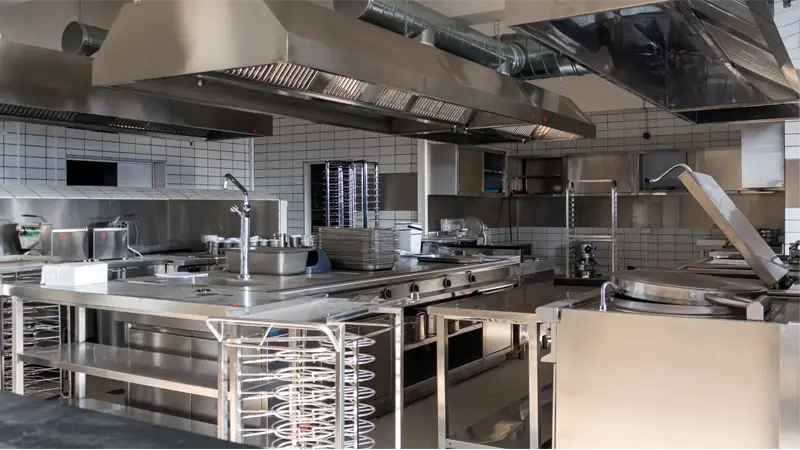
If you're cooking with grease or oils, you'll need a commercial kitchen hood suppression system, inspected at least twice a year under NFPA 17A.
A fixed kitchen's hood system is usually larger and may cover multiple stations, so inspections tend to take a bit longer. If you're building out, a technician can help you figure out the right setup for your equipment.
Also, make sure the space has a Class K extinguisher on hand. It's the standard for any commercial kitchen, and the right type for cooking oil fires.
Plan Your Security Systems
Access Control
In a fixed space, you need to think about access. That's especially true in a shared commissary or multi-tenant building, where your kitchen isn't the only thing behind the door.
Access control systems use key cards, fobs, or codes instead of physical keys. It's a practical upgrade when you have staff on different shifts or vendors coming and going, or keeping expensive inventory like alcohol secure. A physical key can be copied or passed along, but a credential can be turned off in seconds.
Even as a sole tenant, having a log of who came and went is useful if something ever happens.
Security Cameras
Consider cameras at entry points, storage areas, and anywhere expensive equipment or inventory is warehoused. They discourage problems before they happen and give you documentation if something does.
For a single location, start by covering the main entry and storage. If you're thinking about multiple locations down the road, a cloud-based setup makes it easier to check footage remotely and add cameras as you grow.
What to Sort Out Before You Sign
Before committing to a space, get clear answers to these questions:
- Is there an existing fire sprinkler system, and when was it last inspected?
- Is there a fire alarm panel, and is it currently connected to a monitoring service and has been recently inspected?
- Does the hood suppression system cover your cooking equipment, and is the inspection current?
- Who is responsible for scheduling and paying for fire system inspections? You or the landlord?
- Is there an existing access control system, or will you need to install one?
Some of these answers will be in the lease. Others will take a conversation with the building owner or a walkthrough with a fire and security technician. Getting these answers before you sign is a lot easier than chasing them down after you've already committed.
Brothers Fire & Security works with commercial kitchens and food operations across the Twin Cities, handling inspections, hood suppression service, fire alarm monitoring, and access control. If you're getting ready to move into a fixed location and want to know what your specific space will need, reach out to our team to get started.